Preserved moss walls: how they soften a room
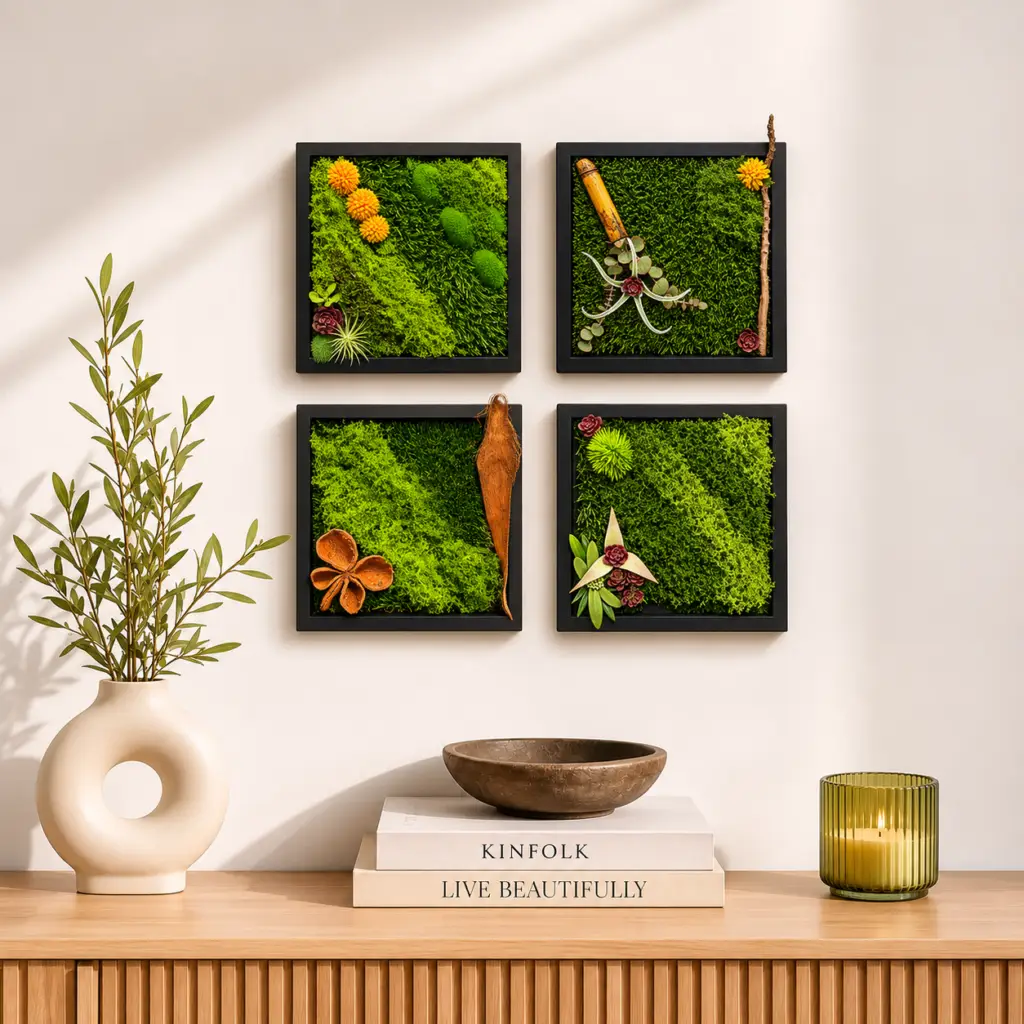
Walk into a room with a preserved moss display and the first thing you notice is the quiet. The green surface absorbs light in a way painted walls cannot. It gives back a soft, matte finish that feels more like a forest floor than a decorative panel. The effect is immediate, and it changes how you experience the space.
Preserved moss is real moss that has been treated with a plant-based solution to replace its natural moisture. The process stops the moss from needing water, light, or soil. It stays soft, green, and alive-looking for years without any care. Unlike dried moss, which becomes brittle and loses color, preserved moss keeps its texture and hue. That makes it a practical choice for indoor use where natural light is limited or maintenance is not possible.
How preserved moss alters a room's atmosphere
Color has a known effect on mood. Green sits in the middle of the visible spectrum, and the human eye processes it with less effort than warm or cool extremes. A preserved moss wall introduces a large area of this calm green without the glare that comes from glossy finishes or bright paint. The surface texture also plays a role. The uneven, soft look of sheet moss or cushion moss breaks up the hard lines of furniture and walls. It adds a layer of depth that flat surfaces cannot provide.
Sound behaves differently around moss. The tiny fibers and irregular surface absorb some high-frequency noise, reducing echo in a room. The effect is subtle but noticeable in spaces with hard floors or large windows. A moss panel acts like a natural acoustic buffer, making conversations feel more contained and less sharp. This is one reason preserved moss installations appear in offices, reception areas, and restaurants. The visual calm matches an audible calm.
The practical side of moss wall kits
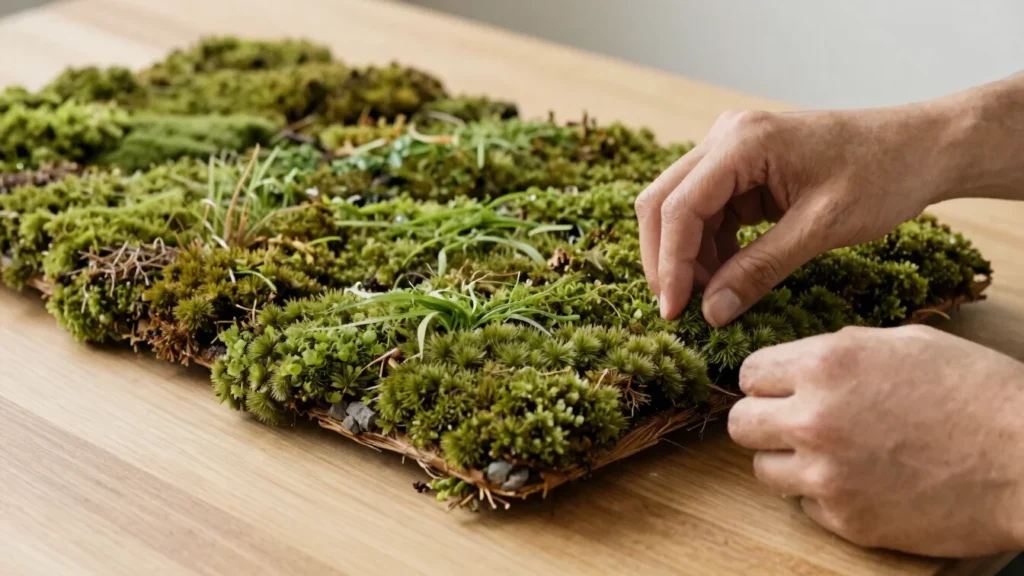
Moss wall kits make this kind of installation accessible to anyone who wants to try it. A typical kit includes preserved moss in one or more varieties, a backing board, adhesive, and sometimes a wood frame. The moss types you find in these kits are usually reindeer moss, sheet moss, and cushion moss. Each has a different texture and color. Reindeer moss has a branching, coral-like structure. Sheet moss grows flat and dense. Cushion moss forms small, rounded clumps. Combining them creates a layered look that mimics a natural landscape.
When choosing materials for a moss display, the frame matters as much as the moss. A wood frame gives the panel a finished edge and protects the back of the moss from dust. It also makes mounting easier. You can hang the frame on a wall using standard picture hooks or a French cleat system for heavier pieces. The depth of the frame depends on the moss thickness. Reindeer moss needs a deeper frame because it stands off the backing board, while sheet moss sits flatter. Checking the frame depth before ordering a kit avoids the problem of moss pushing against the glass or rising above the frame edge.
Adhesive choice affects how the moss behaves over time. Most kits use a strong, water-based glue that grips the moss without drying it out. The adhesive layer must be even so the moss does not peel away from the backing in patches. A good kit includes clear instructions on how to apply the moss, but you can also arrange the pieces by hand to create your own pattern. This is where the creative part comes in. You can group similar textures together or alternate them for contrast. The color palette of preserved moss ranges from deep forest green to yellow-green and even bleached tones. Sticking to two or three shades keeps the display cohesive.
What changes in the room
Once the moss panel is up, the room starts to feel different in small ways. The green surface draws the eye without demanding attention. It works as a focal point that does not compete with other decor. In a room with neutral walls, a moss panel adds the one strong color element that anchors the space. In a room with existing plants, the moss ties the natural elements together without needing watering or pruning.
Humidity and temperature stay the same. Preserved moss does not release moisture into the air or absorb it from the room. That means it will not warp the frame or damage the wall behind it, as long as the wall is dry and the room has normal humidity levels. Direct sunlight will fade the color over time, so placing the panel away from windows or south-facing walls extends its life. If the room has high humidity, like a bathroom, preserved moss can still work, but the frame should be sealed to prevent moisture from getting behind the backing.

Choosing the right setup
The size of the panel matters for the effect you want. A small square, around 40 by 40 centimeters, works as an accent piece above a desk or beside a mirror. A larger panel, covering a whole wall section, changes the room's character completely. It creates a biophilic feel, bringing the outside in without the mess of soil or the risk of pests. Moss wall kits come in standard sizes, and some brands offer custom dimensions. If you are installing a large panel, consider the weight. Preserved moss is lightweight, but a full-size panel with a wood frame can be heavy enough to require two people to mount it.
Maintenance is minimal. Every few months, you can brush the moss gently with a soft brush or use a hairdryer on a cool, low setting to remove dust. Avoid cleaning products or water. The preservation treatment keeps the moss flexible, but moisture can break down the solution over time. If a piece of moss comes loose, you can glue it back with a clear craft adhesive. The panel should last five years or more with basic care.
When you plan your setup, think about the surrounding wall color. A white or light gray wall lets the green stand out. A dark wall makes the moss recede, creating a more moody, subtle effect. Lighting also changes how the moss looks. Warm light brings out the yellow tones in reindeer moss, while cool light emphasizes the blue-green of sheet moss. Adjustable track lighting or a simple picture light can change the feel of the panel depending on the time of day.
The selection of materials for a moss display does not stop at the moss and frame. The backing board inside the frame should be rigid enough to hold the adhesive without bowing. Most kits use MDF or plywood. If you are building your own frame, choose a board that is at least 6 millimeters thick. Thinner boards may warp under the weight of the moss and adhesive. The adhesive itself should be non-toxic, especially if the panel goes in a bedroom or a room where children spend time. Water-based adhesives are common and safe.
One detail that often gets overlooked is the gap between the moss and the glass. Some frames include a glass front to protect the moss from dust. If you use glass, leave a small gap so the moss does not press against it. Pressure can flatten the texture and make the moss look compressed. A spacer or a deeper frame solves this. For a more open look, skip the glass entirely and let the moss be exposed. It will collect dust a little faster, but the texture remains intact.
Why it works
The change a preserved moss wall brings is not just visual. It changes how you feel in the room. The green color and soft texture signal to the brain that the environment is safe and restful. This is not a claim backed by a specific study, but it is an observation that many people who install moss panels report. The room becomes quieter in both sound and spirit. The moss does not demand anything from you. It does not need watering, pruning, or replacement. It just sits there, doing what it does best: looking like a piece of the outdoors that decided to stay.
For anyone who has considered adding more plants to a room but hesitated because of the care they require, preserved moss offers a middle ground. It gives the organic feel of live greenery without the commitment. It changes the atmosphere of a room in a subtle but real way, and it does so with very little effort on your part. That is the appeal. That is why more people are turning to moss wall kits to bring a quiet, grounded presence into their homes and workspaces.